How Long Does it Take To Get Approved For a Business Loan?

The answer to your question depends on several factors, such as the type of loan, the lender, and the complexity of your application.

What are the eligibility requirements for a working capital loan?

The eligibility criteria for a working capital loan can vary depending on the lender, but here are some common requirements

What is the difference between a savings account and a money market account?

Certainly! Let’s explore the differences between a savings account and a money market account (MMA)

How do I calculate interest on a savings account?

Certainly! Calculating interest on a savings account involves understanding the growth of your money over time. Let’s break it down

What are the eligibility requirements for a working capital loan?

The eligibility criteria for a working capital loan can vary depending on the lender, but here are some common requirements

Tampilkan postingan dengan label Credit Business Loans. Tampilkan semua postingan

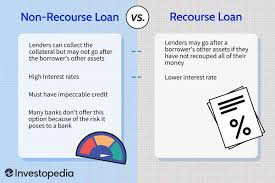
Can you give me an example of non-recourse agreement?


Let's say you're looking to purchase a property, such as a commercial building, but you don't have enough funds to cover the entire purchase price. In this situation, you may approach a bank or a financial institution to secure a loan. 

However, you might be concerned about the potential risk of losing your personal assets if you default on the loan.

To address this concern, you negotiate a non-recourse agreement with the lender. Under this agreement, the lender agrees that the property itself will serve as the sole collateral for the loan. In other words, if you default on the loan and are unable to repay it, the lender's only recourse is to seize and sell the property to recover their funds. They cannot pursue your personal assets or hold you personally liable for the remaining debt.

In this scenario, the non-recourse agreement protects your personal assets and limits your liability to the value of the property. If the property's value is insufficient to cover the outstanding loan balance, the lender typically absorbs the loss.

It's important to note that non-recourse agreements can vary depending on the jurisdiction and the specific terms negotiated between the parties involved. It's advisable to consult with legal and financial professionals to fully understand the implications and enforceability of such agreements in your particular situation.

Can I get a Government-backed Loan With Bad Credit?

Can I get a Government-backed Loan With Bad Credit? - A government-backed loan is a type of loan that is guaranteed by the federal government, which reduces the risk for lenders and makes it easier for borrowers to qualify. There are several government agencies that offer different loan programs, such as the FHA, USDA, and VA. Depending on the type of loan you apply for, you might be able to get a government-backed loan with bad credit, but you will still need to meet other eligibility criteria.

Some of the factors that lenders will consider when evaluating your application for a government-backed loan are:

  • Your property and location: Government-backed loans also have specific requirements for the property you want to buy or refinance. For example, FHA loans require the property to meet certain safety and quality standards. USDA loans are only available for properties in eligible rural areas. VA loans are only available for eligible veterans, service members, and their spouses who want to buy, refinance, or improve their primary residence.

If you are interested in applying for a government-backed loan, you will need to find a lender that participates in the program you want. You can use the [lender search tool] on the HUD website to find FHA-approved lenders, the [eligibility map] on the USDA website to find USDA-eligible areas and lenders, and the [lender locator] on the VA website to find VA-approved lenders.

You may also want to explore other options for borrowing if you have bad credit, such as credit unions, community development financial institutions (CDFIs), minority depository institutions (MDIs), or online lenders. These lenders may offer more flexible terms and lower interest rates than traditional lenders, and some of them may participate in government-backed loan programs as well.

Before you apply for any loan, it is important to compare different offers and understand the costs and benefits of each option. You should also check your credit report and score and try to improve them if possible, as this can increase your chances of getting approved and getting better terms. You can get a free copy of your credit report from each of the three major credit bureaus once a year at [www.annualcreditreport.com].


I hope this information was helpful... 😊

Capital One Business Loans

Capital One is a bank that offers various types of small-business loans, such as:


To qualify for a Capital One business loan, you need to have at least two years in business, a Capital One business checking account, and a good credit score (usually above 700). You also need to apply in person at one of their branches, which are located in eight states and the District of Columbia.

If you are interested in learning more about Capital One business loans, you can visit their website here or call them at 1-800-926-1000. You can also compare their loans with other lenders on NerdWallet or Bankrate. I hope this helps you find the best loan for your business. 😊

What is The Interest Rate For a Business Loan With Bad Credit?

What is The Interest Rate For a Business Loan With Bad Credit - Interest rates on bad credit business loans can vary significantly based on the lender, your credit risk, and the specific terms of the loan.


Here are some insights:

  1. Average Rates: Generally, interest rates for bad credit business loans commonly range from 25% and upward. However, keep in mind that these rates can be higher depending on individual circumstances.

  2. Lender-Specific Rates:

    • OnDeck: Offers business loans ranging from $5,000 to $250,000, but the specific interest rate is not disclosed.
    • BlueVine: Provides loans from $6,000 to $250,000, with undisclosed interest rates for their Flex 6 plan.
    • Biz2Credit: Offers loans from $25,000 to $500,000, but the interest rates are not publicly disclosed.
    • Fundbox: Provides loans from $1,000 to $150,000, starting at 4.66% interest.
    • Rapid Finance: Offers loans ranging from $5,000 to $1 million, with undisclosed interest rates.
    • Credibly: Provides loans from $5,000 to $400,000, with factor rates as low as 1.11.
    • Kiva: Offers loans up to $15,000 at 0% interest, with no specific credit score requirement.
  3. Credit Score Impact: Remember that while bad credit may lead to higher interest rates, it’s essential to explore options that align with your business needs and financial situation. Consider minimum credit score requirements when evaluating lenders.
  4. Keep in mind that the lowest rates are typically available to the most qualified borrowers, and business owners with bad credit may be offered rates near the top of the APR range. Choose a lender whose loan aligns with your credit score qualifications and business goals